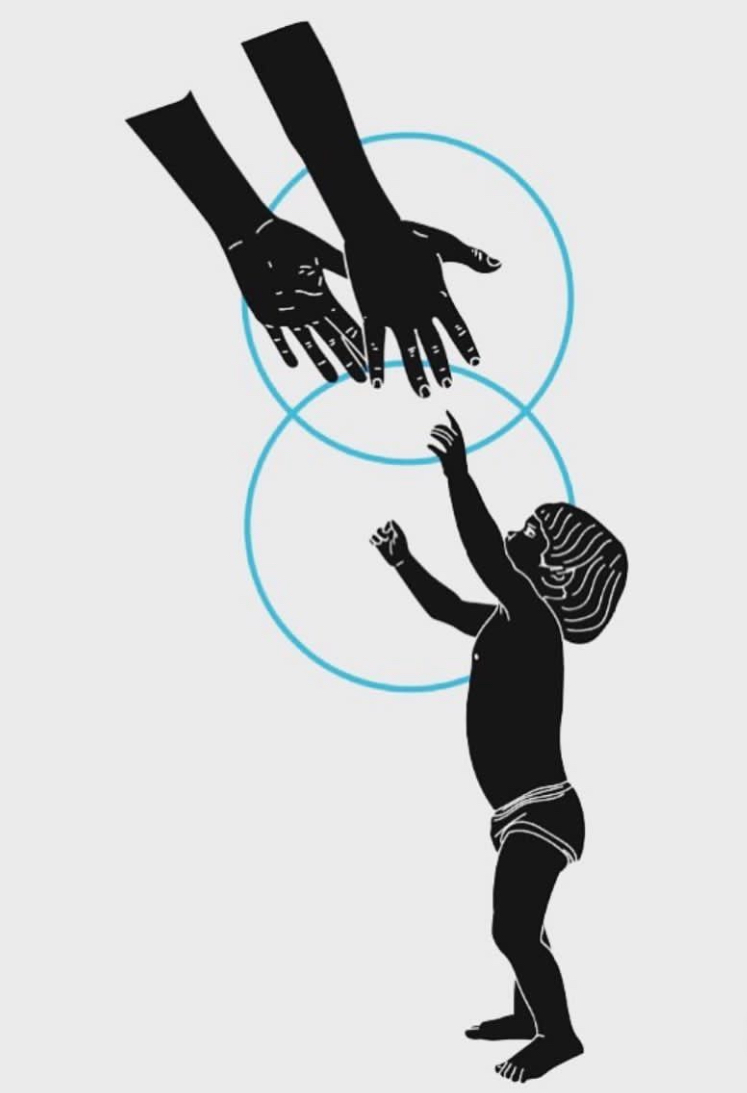
“Pray then like this: Our Father in heaven” [Matthew 6:9]
How often have you been tempted to flip to the last page of a book or scroll to the end of a story to see how it ends? It’s tempting because in our western world, we’re used to seeing the most important parts of a story at the beginning and the end. But this wasn’t the case in the ancient Jewish world. Among the Hebrew writers of the biblical stories, there was a custom of putting the most important part of your writing, the part you wanted to make sure no one missed, right in the middle of your work.
This is exactly what we see at the center of Jesus’ teaching called The Sermon on the Mount. At the very heart of his sermon lies a prayer that we commonly call The Lord’s Prayer. At first glance, it seems fairly simple and inconsequential. Yet, in typical Jesus fashion, the prayer is understated and deceptively simple. Embedded within a short and seemingly-simple prayer are deep theological truths.
Before Jesus tells his disciples how to pray, He gives us a few pointers on how not to pray. He tells us not to focus on impressing the people around us when we pray. Our prayers should be a conversation between us and God, and not to impress anyone with how holy we are. He also tells us not to pray with a whole bunch of empty words. We don’t need to impress God or try to manipulate Him by using a lot of big religious words. He tells us to keep it simple, talk from our hearts, straight to Him. He’s listening.
As soon as Jesus opened His mouth and uttered the first line, His audience knew that He was saying something radically different than anything they had heard before. First, modern scholars agree that Jesus was praying in Aramaic. Aramaic was the language of the nations that had conquered Israel for centuries. Although it had become the common language of the land, it wasn’t their language. Their language was Hebrew. When they read from the scriptures, prayed and conducted their temple rituals, they spoke Hebrew. Hebrew was the holy language of God’s holy people, and Jesus’ listeners would have expected Him to pray in Hebrew. But He didn’t. Instead, He prayed in a common language—a language that crossed borders and boundaries, cultures and religions. Remember, the people gathered around Him to hear His sermon were a mixed lot of Israelites and foreigners.
So when Jesus led with “Our Father” in Aramaic, He was telling the listening world about a God who was welcoming all His children home. He was no longer going to be understood as the God of Abraham, Isaac and Jacob—a God exclusively for the Jewish people. He had come to earth for every nation, every tribe, and every language. Jesus was throwing the door wide open to seekers from every nation and every culture. And it’s worth noticing that Jesus didn’t teach us to pray “My Father,” He wants us to pray “Our Father.” Let that sink in. This is an acknowledgement that we are all unified in the family of God. When we come before Him, we come as His body in need of Him and in need of each other.
The word Jesus uses for father is the Aramaic word, “Abba.” In several countries, this is still the first word spoken by many babies. It is the intimate name a child uses to call to his own dad, while also being a title of respect. There are places in the Old Testament where we see God being described as “like a Father,” but this is the first written record of someone calling out to God as their dad. It’s a powerful picture of a God who has come near and is seeking a relationship with all of His children.
Paired with the idea of Abba, the God who is near, Jesus adds “in heaven,” which can also mean “in the skies.” This presents a significant contrast. God is as close as a father, yet, He is also the God of all Creation who dwells in majesty far above all that we can comprehend.
In only the first four words of the prayer, Jesus has already introduced new and radical ideas to His listeners. He has made it clear that His message is for everyone. While these were words spoken to a specific gathering of people at a specific time, the power of the true Word of God is that it reaches across language barriers, crosses continents and oceans, stretching through the centuries into the hearts and minds of all His children. He is no longer only the God of Israel, He is the God of all mankind, the Savior of the World, and He is teaching us all how to come before His father as one.
Scripture Reference:
“And when you pray, you must not be like the hypocrites. For they love to stand and pray in the synagogues and at the street corners, that they may be seen by others. Truly, I say to you, they have received their reward. But when you pray, go into your room and shut the door and pray to your Father who is in secret. And your Father who sees in secret will reward you. “And when you pray, do not heap up empty phrases as the Gentiles do, for they think that they will be heard for their many words. Do not be like them, for your Father knows what you need before you ask him. Pray then like this: “Our Father in heaven, hallowed be your name. Your kingdom come, your will be done, on earth as it is in heaven. Give us this day our daily bread, and forgive us our debts, as we also have forgiven our debtors. And lead us not into temptation, but deliver us from evil. For if you forgive others their trespasses, your heavenly Father will also forgive you, but if you do not forgive others their trespasses, neither will your Father forgive your trespasses.” [Matthew 6:5-15]
Discussion Questions:
1. What does prayer look like in your life? Does it seem strange or unfamiliar to talk to someone you can’t see?
2. Is it easier for you to picture God as a father, or as the God of the skies?
3. Take some time to pray now. If you’re in a group, pray with your group. If you’re alone, pray and talk to Jesus on your own. Spend some time thanking God that He is both a personal God who is near and the mighty, powerful God of all Creation.