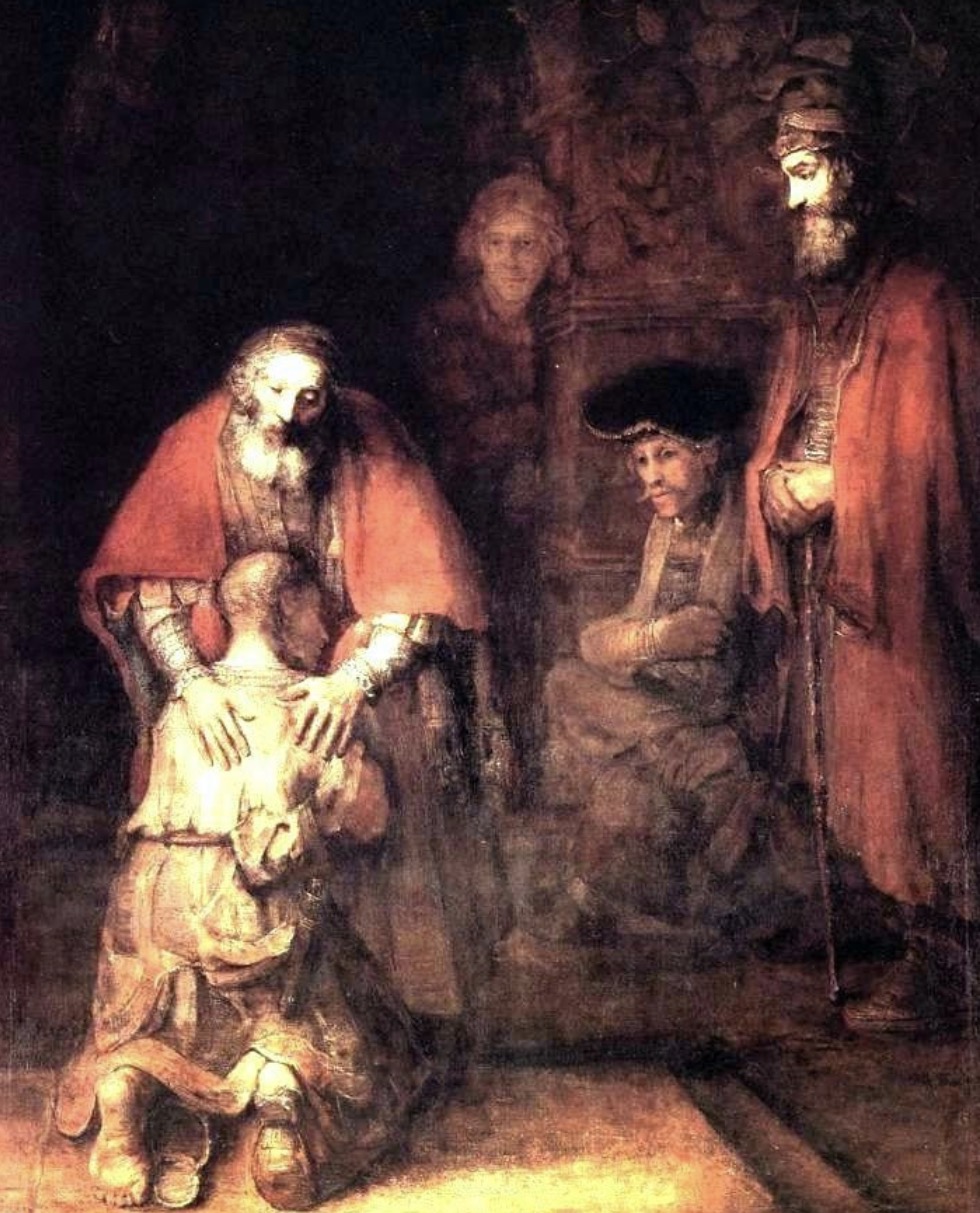
“Now his older son was in the field, and as he came and drew near to the house, he heard music and dancing.” (Luke 15:25)
When it comes to the story of the Prodigal Son, most of us are much more familiar with the story of the lost younger brother than we are with the older bother’s story. And maybe this is because it’s an easier story to tell. We all love a dramatic before and after, rags to riches kind of a story. On the other hand, the older’s brother’s story is a subtle, quiet story that we can easily hurry past or read as an epilogue after we’ve celebrated the return of the lost younger brother. But Jesus doesn’t end His story there. Remember, He is telling the story to the Pharisees, to the “older brothers.” The second part of the story is the central part, it’s the climax that Jesus has been working toward in all of Luke 15.
Without the cultural context, there’s a lot of information that we easily miss in this part of Jesus’ story. For instance, the older brother had an important role to play when his father hosted a feast. It was his job to welcome guests and encourage them to eat. The feast would have waited for his arrival. When we read that he refused to go in, we need to understand that this meant the celebration was at a standstill. All the important men of the village were gathered, and it was very obvious that something was wrong. By refusing to come in, the son was publicly humiliating his father. Not only that, but the father endured further humiliation by leaving the feast and going out to plead with his son.
When the older son addresses his father in verse 29 by saying, “Look,” he is deliberately dishonoring his father in a way that was unacceptable in his culture. He doesn’t say, “father,” or “my father,” as even the younger brother did when he demanded his inheritance. He is addressing his father in disrespect and anger. We also see his lack of love and respect for his brother in the way he refers to him as, “this son of yours,” rather than as, “my brother.” In this, we see that the older brother is a man who is connected to his family out of law and obligation rather than relationship. He congratulates himself that he has served his father for many years and always obeyed him. Yet, it is clear he sees his relationship with his father as one of master and servant, rather than a loving father-son relationship.
The oldest son is angry with his father because feels that he has done everything right, he has followed all the rules and worked hard. He is righteous and he feels that his rule keeping has entitled him to the father’s blessing. Yet, we see that even while following the rules, he has broken his relationship with his father. This is the whole point Jesus is making—the Pharisees are focused on broken rules, Jesus is focused on the broken relationship. Both brothers broke their relationship with their father and caused him great dishonor. In both cases, the father goes out to seek his lost son. The younger son knows he’s lost. What about the older son?
Throughout the story, the word used for son is the greek word “huios,” the common word for son. But there is one instance where a different word is used. When the father entreats his oldest son to come in, he uses the word “teknon” which carries the meaning, “beloved son.” In his plea, we hear the father reaching out with an offer of costly love. As he tells this story, Jesus is reaching out to his audience, the Pharisees, from the Father heart of God. These are the same men who are plotting Jesus’ death, men who will eventually manipulate circumstances to see him tortured and killed. You can imagine Jesus looking into their eyes as He comes to the part where the father calls his son teknon. He is reaching out His hand, reaching into their hearts as He calls each of them His beloved sons. But they have to let go of their grip on their rules and their own self-righteousness in order to take ahold of His offer of love.
The story ends without resolution. The father goes out to seek his lost older son and extends an offer of love and restored relationship. He pays the costly price of reconciliation through his own humiliation. Yet, the story ends before we see what the older son chooses. Will he take hold of the father’s outstretched hand and enter into the celebration? Will he accept the grace he so desperately needs? Jesus left the story unfinished because it was up to his audience to determine the outcome. Would the listening Pharisees hear the Father pleading with them as His beloved sons? For those of us who are listening today, whether we are more like the lost older son or the lost younger son, will we accept the Father’s costly demonstration of love and enter into a restored relationship with our Creator? Once we have accepted his love and been restored, we have the opportunity to become like Our Father, ready to extend costly love to all of the lost brothers and sisters around us, pointing them toward the Father and their ultimate home.
Scripture Reference:
“Bring the fattened calf and kill it. Let’s have a feast and celebrate. For this son of mine was dead and is alive again; he was lost and is found.’ So they began to celebrate. “Meanwhile, the older son was in the field. When he came near the house, he heard music and dancing. So he called one of the servants and asked him what was going on. ‘Your brother has come,’ he replied, ‘and your father has killed the fattened calf because he has him back safe and sound.’ “The older brother became angry and refused to go in. So his father went out and pleaded with him. But he answered his father, ‘Look! All these years I’ve been slaving for you and never disobeyed your orders. Yet you never gave me even a young goat so I could celebrate with my friends. But when this son of yours who has squandered your property with prostitutes comes home, you kill the fattened calf for him!’ “ ‘My son,’ the father said, ‘you are always with me, and everything I have is yours. But we had to celebrate and be glad, because this brother of yours was dead and is alive again; he was lost and is found.’ ””
Luke 15:23-32 NIV
Discussion Questions:
1. Do you identify more with the younger bother or the older brother?
2. How do you respond when you feel like you’ve done everything right but life doesn’t turn out the way you think it should? Do you feel like God owes something to you based on your good behavior?
3. What does it look like for us to become like the Father, extending grace and costly love to the lost people in our lives?