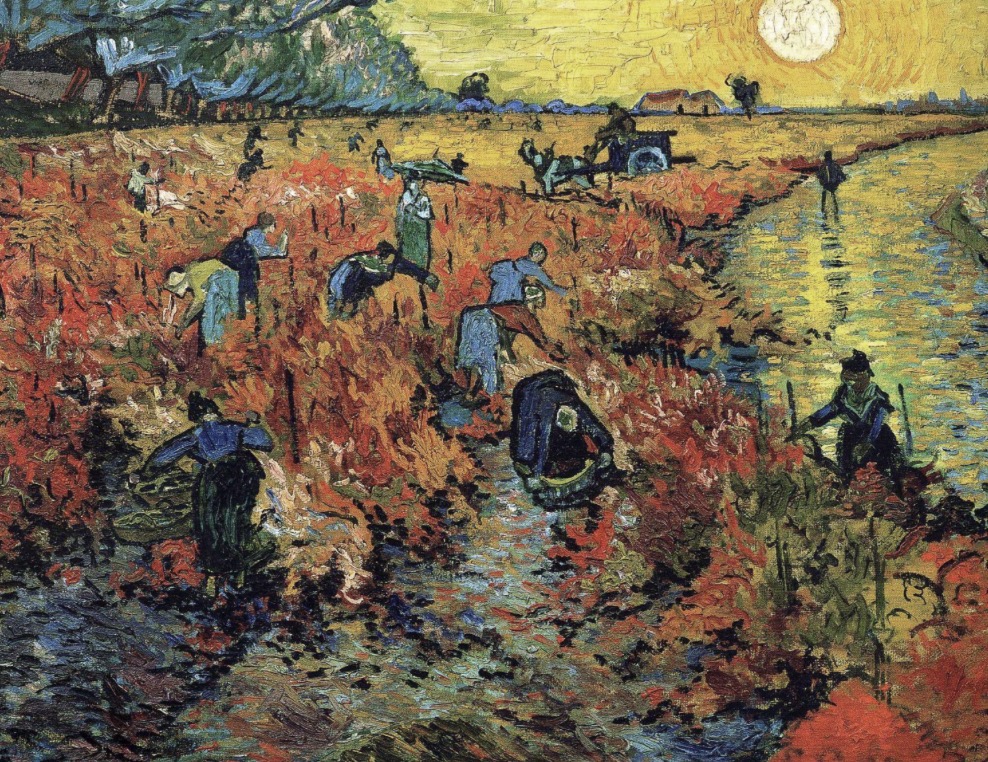
“For the kingdom of heaven is like a master of a house who went out early in the morning to hire laborers for his vineyard.” Matthew 20:1
When we read this story, it’s easy to focus on the laborers, but that’s not really what it’s about. This story is about the vineyard owner, the master. It’s another story that Jesus tells to explain to His disciples what His Father and His Father’s kingdom are like. At first read, it’s a really frustrating story, right? It feels unfair and tends to have us all grumbling about injustice. But here’s the thing, no one in this story is treated unjustly. No one is underpaid. The problem here is that some people are overpaid, and this makes us mad.
The story begins with the master going out in the early morning to hire laborers to work in his vineyard. It was either time to prune or harvest and he needed extra help. Who were these laborers? These weren’t men who had the security of their own land to work. Maybe they were foreigners or outsiders, men down on their luck. Most likely, they had wives and children at home—families who would only eat if their men were able to find a day’s work. So, they stood in the public market, trying not to catch the eye of passersby, ready to run into the road to beg for a job from any potential employer who approached. This was a very humbling business.
The manager arrived and chose some of the men—likely the fastest and strongest who got to him first. They agreed upon a denarius, the standard wage for a day’s work. These fortunate men were spared from passing another humiliating moment publicly begging for work. They would be dignified by the opportunity to earn a day’s wage and return home with honor, able to feed their families. By all measures, these men were the lucky ones.
After hiring the first set of men, the master does something unexpected. He goes back to the market throughout the day and continually hires more laborers, telling each group of men that he will pay them what is fair. He does this until he gets to the men he hires last. He tells the last men nothing of the pay they should expect.
Why does he keep going back? Is he an unorganized and incompetent manager who can’t figure out how much labor he needs? Or, is he a deeply compassionate man who spends the day concerned for the men left behind? Maybe they were the ones who were smaller, weaker, or the ones with a limp. The master spends the length of the day traversing the dusty road in the heat of the sun, returning over and over again to see who still hasn’t been hired. Each time he arrives at the market, he finds men still standing, still hoping against all odds that someone will offer them work. Even at the end of the day, there are still men standing, unwilling to give up—hoping that they won’t have to return home to their hungry children empty-handed.
When the time comes to pay the laborers, a couple of unusual things happen. First, a manager (or a foreman or steward) arrives on the scene. Where has he been all day? It would have been expected for him to be the one going to the market to hire the laborers. Yet, the master chose to go himself. Out of compassion and solidarity, he continually returned to the market to check on those left behind.
The second unusual occurrence is that the master instructs his manager to pay the laborers in reverse of the expected order. He wanted him to pay the last laborers first. It would have been much simpler to pay the first men first. They would have taken their agreed-upon payment and been on their way, never knowing how “unfairly” the master had chosen to pay the laborers who came after them. Another detail to note is that if the master wanted to be generous to the men hired at the eleventh hour, he could have simply given them each a denarius and sent them on their way. Instead, he dignifies them by giving them the opportunity to work rather than reducing them to recipients of charity. These aren’t men begging for a handout, they’re asking for the opportunity to work.
So, why did he do it? He could have avoided the hassle of their grumbling by paying in the expected order. Jesus is specifically challenging His disciples. He wants them to understand something about grace. He is challenging them to become people of radical generosity—people ready to celebrate with those at the back of the line. It doesn’t cost them anything, they’re getting exactly what they’ve earned—a fair wage for a day’s labor. The master is the one “loosing out.” He spend an exhausting day on a hot, dusty road. He paid his laborers far more than he was obligated to. He chose to be generous, and he wants each of the men to celebrate his generosity, to celebrate that those at the back of the line have received radical grace.
This challenge is for all of us. It is very similar to the father‘s plea to the older brother in the prodigal son story. It is an invitation to step out of the narrow place where we insist that everyone gets what he deserves. It is an acknowledgment that, at the gracious hand of our Master, none of us get what we deserve. We are all recipients of the costly grace and radical generosity of our good Father. He invites us to live with Him in the spacious place of abundance where we celebrate with those around us, knowing that we all have more than enough so much more than we deserve.
Scripture Reference:
““For the kingdom of heaven is like a landowner who went out early in the morning to hire workers for his vineyard. He agreed to pay them a denarius for the day and sent them into his vineyard. “About nine in the morning he went out and saw others standing in the marketplace doing nothing. He told them, ‘You also go and work in my vineyard, and I will pay you whatever is right.’ So they went. “He went out again about noon and about three in the afternoon and did the same thing. About five in the afternoon he went out and found still others standing around. He asked them, ‘Why have you been standing here all day long doing nothing?’ “ ‘Because no one has hired us,’ they answered. “He said to them, ‘You also go and work in my vineyard.’ “When evening came, the owner of the vineyard said to his foreman, ‘Call the workers and pay them their wages, beginning with the last ones hired and going on to the first.’ “The workers who were hired about five in the afternoon came and each received a denarius. So when those came who were hired first, they expected to receive more. But each one of them also received a denarius. When they received it, they began to grumble against the landowner. ‘These who were hired last worked only one hour,’ they said, ‘and you have made them equal to us who have borne the burden of the work and the heat of the day.’ “But he answered one of them, ‘I am not being unfair to you, friend. Didn’t you agree to work for a denarius? Take your pay and go. I want to give the one who was hired last the same as I gave you. Don’t I have the right to do what I want with my own money? Or are you envious because I am generous?’ “So the last will be first, and the first will be last.” [Matthew 20:1-16 NIV]
Discussion Questions:
1. How does this story challenge your idea of fairness? What bothers you about the story?
2. What does this story tell us about the heart of God the Father? What does it tell us about the culture of the Kingdom of Heaven?
3. What did you learn about grace (getting what you don’t deserve)? What did you learn about radical generosity?