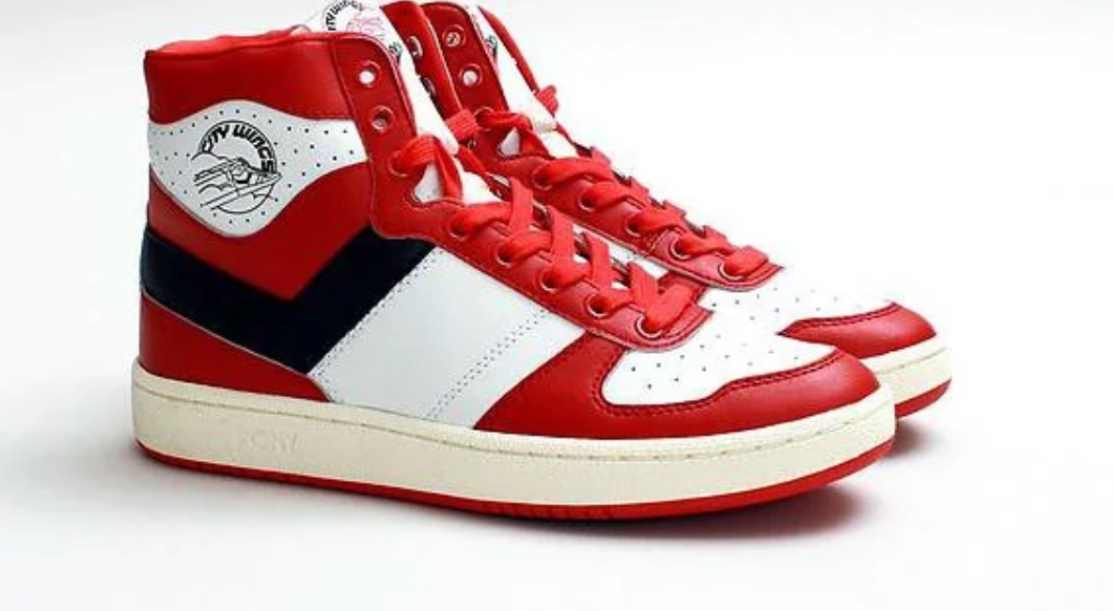
[Photo Above] Is a picture of Prowing shoes that could be bought at Payless Shoe Source in 1985 for $29.99. When you were poor in this era and asked for Jordan Air 1’s this is what you got.
He Takes our Shame
“On the third day there was a wedding at Cana in Galilee, and the mother of Jesus was there. Jesus also was invited to the wedding with his disciples. When the wine ran out, the mother of Jesus said to him, “They have no wine.” John 2:1-11
Even if you haven’t spent much time reading the bible, you’re probably pretty used to having it around. There are copies of the Bible in most hotel rooms, Bible verses turn up in the stands at American sporting events (John 3:16), on bumper stickers and on tee-shirts. Because we’re so used to the Bible, it’s easy to forget that when it was written, it was written by Eastern authors, to an Eastern audience. The Bible is full of universal truths that can be understood by people throughout time and throughout the world. But there are layers that we miss when we don’t understand the cultural or historical context.
Some aspects of the story of the wedding at Cana can’t be fully understood without understanding the ancient Middle Eastern culture of hospitality. When we read the line in John 2, “they have no wine,” it’s easy to read it and think, “no big deal, just send someone out to get more,” because that’s what we would do as Twenty First Century Americans. We fail to understand what a huge deal it was to run out of wine at a wedding. Ancient Jewish families would spend a year preparing for a wedding. Wedding celebrations often lasted seven days and it was the host’s obligation to provide food and drink for their guests. The wine was a central part of it, both symbolically and practically. To fail to provide it would be deeply shameful. And the shame wouldn’t just affect the host, it would effect his entire extended family.
We aren’t told why there wasn’t enough wine—whether the host failed to prepare, or more people came than he expected. Maybe he was poor or disadvantaged and provided all he could afford. Cana was a small town, maybe he was the one who grew up under people’s constant disapproval and disappointment, just never able to get it right. And here he was again, about to embarrass his family and his newly gained in-laws. He would be crushed under the weight of shame once again, pushing him further to the margins of the community. And just when everyone is about to find out about his epic failure, Jesus shows up and does something completely unexpected. He steps in in a beautiful way in order to cover his shame. He doesn’t just turn water into common wine, He turns it into an exceptional wine of the finest vintage. The host was on the edge of epic failure and complete public humiliation, and instead he became the brilliant man who saved the best for last.
Remember back to last week when we were talking about the garden. Adam and Eve hid from God because they were ashamed. And just as Jesus turned water into wine to cover the wedding host’s shame, He acted to cover Adam and Eve’s shame. Genesis 3:21 tells us, “The Lord God made garments of skin for Adam and his wife and clothed them.” Have you ever thought about where the skins came from or what the garments looked like? God had to kill innocent and beloved animals from His garden to make clothes for Adam and Eve. This is the first death recorded in the Bible. And you may have seen some depictions of Genesis 3 where Adam and Eve look like cave people in raggedy furs. It might be more accurate, if we remember that we’re talking about the Creator of heaven and earth, the God who designed gazelles and peacocks, to think that He clothed them extravagantly. They were His children and He loved them dearly. Just as Jesus turned water into the finest wine, it might not be crazy to imagine that God fashioned garments for Adam and Eve that were exquisite and beautifully crafted—more fitted for a king and queen than for prehistoric people. We see an example of this in Ezekiel 16:1-13, when God talks about the way He clothes His people in the finest fabrics available and bestows His splendor on them.
Both the wine and the animal skins point forward toward another miracle, another sacrifice that would cover our shame once and for all with His love. They show the need for a Messiah to set us free from the crippling lie of shame and the way it separates us from the God who made us with His own hands and whose love for us is incomprehensible. Shame tells us we’re not worth it, that we should turn our backs on God and hide from Him because He’s through with us. Jesus’s death rewrites the narrative. Our Savior beckons us out of hiding to find that He’s been there all along. He didn’t leave, we did. And He’s standing where He’s always been, with beautiful new clothes for us in His outstretched hands. First though, He’ll grab your face and cover it with kisses and wrap you up in His arms. At the end of the day, you’ll find that it’s His love that clothes you.
Scripture Reference:
“On the third day a wedding took place at Cana in Galilee. Jesus’ mother was there, and Jesus and his disciples had also been invited to the wedding. When the wine was gone, Jesus’ mother said to him, “They have no more wine.” “Woman, why do you involve me?” Jesus replied. “My hour has not yet come.” His mother said to the servants, “Do whatever he tells you.” Nearby stood six stone water jars, the kind used by the Jews for ceremonial washing, each holding from twenty to thirty gallons. Jesus said to the servants, “Fill the jars with water”; so they filled them to the brim. Then he told them, “Now draw some out and take it to the master of the banquet.” They did so, and the master of the banquet tasted the water that had been turned into wine. He did not realize where it had come from, though the servants who had drawn the water knew. Then he called the bridegroom aside and said, “Everyone brings out the choice wine first and then the cheaper wine after the guests have had too much to drink; but you have saved the best till now.” What Jesus did here in Cana of Galilee was the first of the signs through which he revealed his glory; and his disciples believed in him.”
John 2:1-11 NIV
Discussion Questions:
Questions:
There are different sources of the shame we end up carrying. Sometimes, like the wedding host, we end up covered in the shame of our circumstances, often life circumstances that we have no control over. On the other hand, sometimes, like Adam and Eve, our shame is a direct result of our own decisions.
1. Can you think of an example of a circumstance where someone ends up feeling shame over something they have no control over (e.g. poverty, divorce, a disability or abuse)?
2. What is an example of a decision that someone could make that would result in them being ashamed?
3. Have you ever found yourself adding to the shame that someone is carrying, either by judging them or making fun of them?
4. Think about your own life, are you carrying shame, either from your circumstances or as a direct result of your decisions?