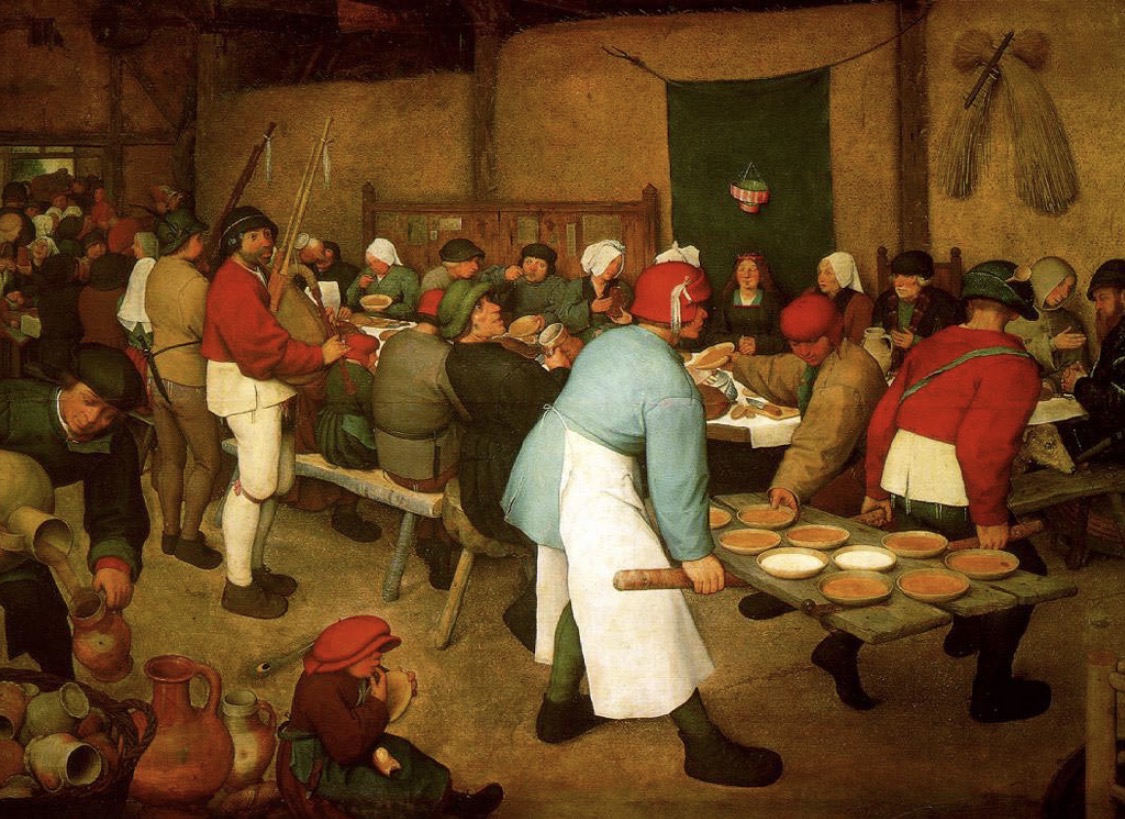
“A man once gave a great banquet and invited many.” Luke 14:16
In the ancient Middle East, a feast wasn’t planned by a simple trip to Costco or a call to the caterer. On the contrary, the planning involved an incredible amount of resources and labor. Preparing meat required an enormous amount of work—only kings and the most wealthy ate meat daily. In planning a feast, a host had to determine what animal(s) to slaughter based on how many people he was feeding. The animal was then slaughtered and butchered. Fuel was needed for a cooking fire, which had to be closely tended as the meat cooked. Additionally, there were side dishes, bread, water for washing and wine for toasting. Preparing and hosting a feast for one’s friends and neighbors was an incredibly costly business and an invitation was offered as a generous gift. Before a host set about preparing, he would have sent his servant out to offer an invitation to all those invited. Then, after many days of preparation and many hours of labor, his servant would return to each house to inform the guests that the much-anticipated time had arrived.
This is exactly what our host does in Jesus’ parable of the great banquet. And yet, rather than coming at the expected time, the guests choose to humiliate the host by making ridiculous excuses and refusing to come. The first man claims to have bought a field he has yet to see. This sort of thing was unheard of. Buying a field was a long, drawn-out process and no man in his right mind would have bought one without first meticulously inspecting it. Similarly, a yoke of oxen means a pair of oxen and before any man bought even one pair, he would have watched the pair work for hours to be certain that the two animals had the same strength and stamina. If they pulled unevenly, the pair was worthless. This man’s excuse would be similar to telling your good friend that you can’t come to her sixteenth birthday party because you just bought five used cars and you need to take them to the mechanic immediately. Finally, a wedding followed a year-long betrothal and would not have been something happening unexpectedly. All three of the men gave lame and insulting excuses. The host had offered them an extravagant and costly gift of love and each of them chose to reject his invitation.
How does the host respond? He had every right to seek revenge against the men who rejected and insulted him. Yet, he chooses instead to redirect his anger toward grace. The men invited first represent the Pharisees and the religious experts. These are the men who were with Jesus, yet continually rejected His invitation—an invitation to His Father and His Father’s kingdom. They were the first invited, those who everyone would have expected to be the honored guests at the feast. The next group of people invited are described as the poor, crippled, blind and lame of the city. By saying “of the city,” Jesus was indicating that these were Israelites, but they were the outcasts of Israelite society. If the religious law experts were the “cream of the crop,” these folks were the “bottom of the barrel.”
After the servant brings in all the Israelite outcasts, there is still room at the feast. The final group invited are those “in the highways and hedges,”—these are the people outside the city. This means that they are the non-Jewish foreigners, the Gentiles, the true outsiders in the eyes of the Pharisees. These were the last people the Pharisees expected to be invited into God’s kingdom. The servant had to compel this group of people to come. This wasn’t because they didn’t want to come. It was because they couldn’t possibly believe that they were actually invited. They needed to be convinced that the host really wanted them there, in spite of how deeply unworthy they felt. They needed to be taken by the hand and led with kindness and gentleness into the place of extravagant goodness that the host had prepared for them.
An invitation to a feast is an invitation into relationship. It’s an invitation to a place where our deepest needs are met—our needs for connection and nourishment. It’s an invitation to flourishing. The table is the place where we share our lives with each other, both knowing others and being truly known. This is the kingdom of Heaven. And it’s available to all of us, here and now. And there is plenty of room at the table—everyone is invited. But it’s up to each of us to put our hand into Jesus’ outstretched hand and accept the invitation to His Father’s house. And once we have, we each have the opportunity to extend that invitation to those around us. The host, our Good Father invites us to partner with Him in living lives of deep love and grace that compel the outcast and outsiders to accept the invitation to come home and join in the great feast of His presence and His goodness. This is true life, and everyone is invited.
Scripture Reference:
“When one of those at the table with him heard this, he said to Jesus, “Blessed is the one who will eat at the feast in the kingdom of God.” Jesus replied: “A certain man was preparing a great banquet and invited many guests. At the time of the banquet he sent his servant to tell those who had been invited, ‘Come, for everything is now ready.’ “But they all alike began to make excuses. The first said, ‘I have just bought a field, and I must go and see it. Please excuse me.’ “Another said, ‘I have just bought five yoke of oxen, and I’m on my way to try them out. Please excuse me.’ “Still another said, ‘I just got married, so I can’t come.’ “The servant came back and reported this to his master. Then the owner of the house became angry and ordered his servant, ‘Go out quickly into the streets and alleys of the town and bring in the poor, the crippled, the blind and the lame.’ “ ‘Sir,’ the servant said, ‘what you ordered has been done, but there is still room.’ “Then the master told his servant, ‘Go out to the roads and country lanes and compel them to come in, so that my house will be full. I tell you, not one of those who were invited will get a taste of my banquet.’ ””
Luke 14:15-24 NIV
Discussion Questions:
1. Do you know that you have a seat at the great banquet table of Gods Kingdom? Do you remember who invited you or how you got there?
2. Have you ever compelled someone to take a seat at the great banquet table of Gods Kingdom?
3. What do you do with people who keep making excuses and don’t come to the banquet table?
4. Moving forward, with all that has been poured into you this year, what will it look like for you to do for others what someone has done for you?
Assignment:
RAISING UP NEW SMALL GROUP LEADERS
Incoming Small Group Leaders:
“Jesus said to them again, “Peace be with you. As the Father has sent me, even so I am sending you.”
John 20:21 ESV
WHAT IS BEING ASKED OF YOU?
Current leaders:
We want to create a moment to inform and encourage the upcoming student leaders who are taking our place next year. In order to do so, we need to clearly recognize the new leaders and inform them on what it really takes to be a Discipleship Group leader. Take some time in your small groups to walk them through what is really being asked of them as they step up and lead. Here’s some key points:
RECOGNIZE THE NEW LEADERS:
- There are many stellar leaders in your groups but there is one who stands above them all. Ask that person if they would be willing to step up and lead the group next year
- Remember we are asking them so they need to respond with a “Yes”
- There are probably multiple other leaders who you must ask to come along side the leader and co-lead the group with them.
SHOW UP:
- Attending each Wednesday morning at BCHS on time! 6:30am.
- If you are not able to make it, communicate with your group, ask your co-leader to cover!
DO THE WORK:
- Create a group text, send the devotion before Wednesday morning
- Read devotional PRIOR to Wednesday morning
- Journal thoughtfully through the devotion
- Read through the scripture that applies to the devotion
- Make sure you come ready to guide them through the questions
Come prepared to share and to create an environment that allows your students to be open and vulnerable as well.
CREATE A CONNECTION:
- Intentionality is key!
- Forming bonds and friendships with your students is so important
- Are you willing to reach out to your students outside of small groups to check in on them?
- Finding time to pray over your group, really being intentional with each student will create TRUST!
SHARE YOUR OWN LEADERSHIP JOURNEY:
- What were the struggles you faced as a leader? What did the Lord show you in this process? Use this time to share and encourage the students to step up in the ways you did!
SENIOR LEADERS: ARE LEAVING BUT WE’RE NOT LEAVING YOU
- Let the upcoming leaders know that you are always available to them via text or phone. Ask them to reach out to you next year
- Be intentional about reaching out to them next school. When you are back in town, swing by the group and see them. Take them out for coffee/lunch